Sunday, September 4, 2016

Count On Us


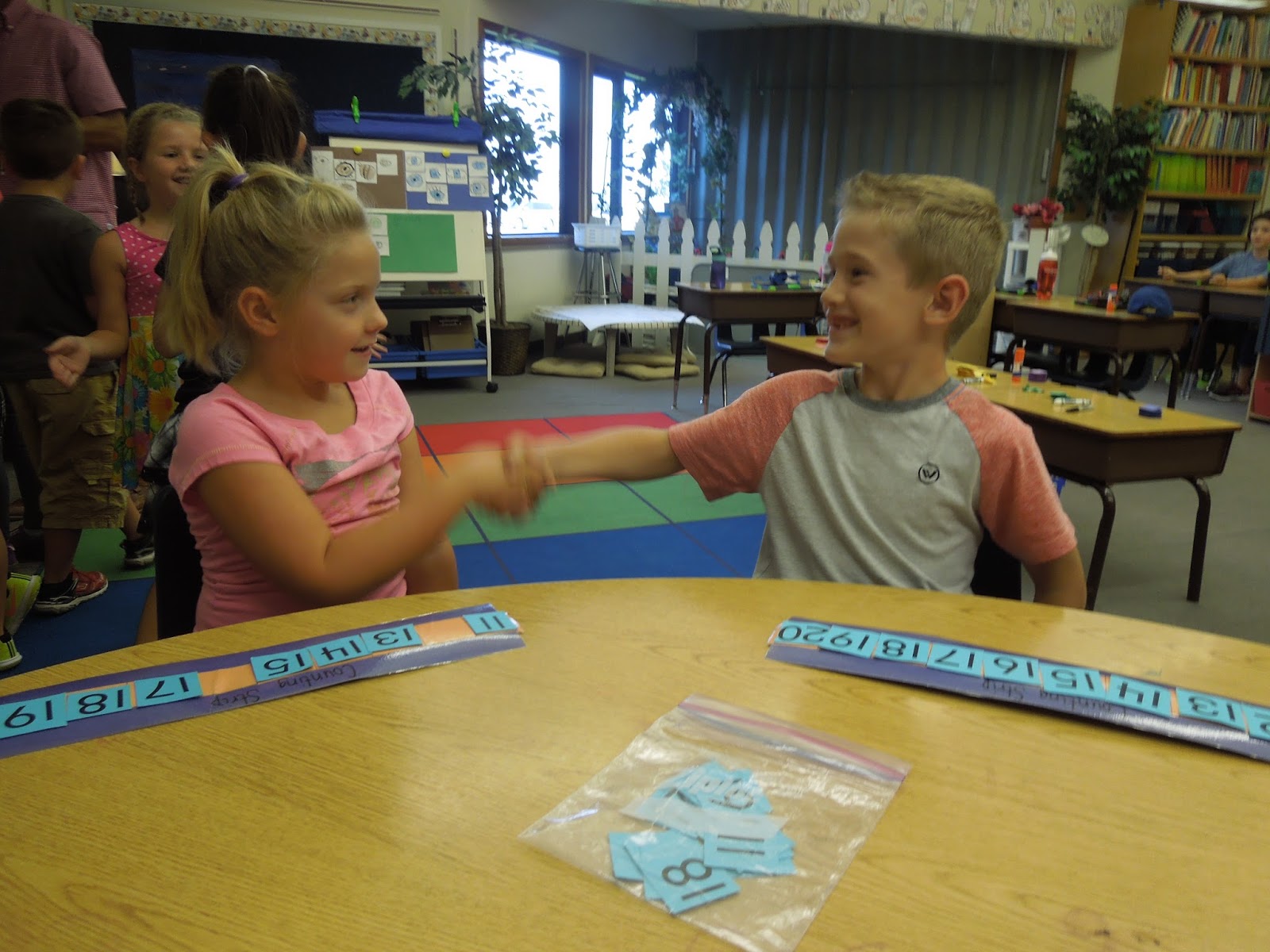
For our first graders, the first seven days of school has been getting to know each other, establishing routines, and reviewing some of the foundational skills the students learned in kindergarten.  In math, we began by reviewing counting and understanding the place value concepts behind those tricky teen numbers.
The teen numbers can be very difficult to learn.  We have been doing many activities to not only learn how to read and write the numbers but also to understand the place value behind the tricky teens.  We started by building these cube towers.  Then we ordered them.


The students noticed that each tower had a ten green cubes in it.  They also found that the black cubes increased by one each time.  I introduced them to the "math way" of counting.  Instead of saying eleven, the math way maintains the place value and we would say "one ten, one."  Twelve is "one ten, two."  Saying numbers the math way, also helps students remember to put the one first when writing teen numbers.  Next, I started to move the kids to the symbolic representation of the number with these cards. Instead of just a one in front, the students see a green ten stack like the cube towers.  Now they can "see" that the number 18 is a ten and an 8.  We ordered and matched these numbers to the cube towers. Of course, a song and video always helps to solidify tricky concepts.


Instead of just a one in front, the students see a green ten stack like the cube towers.  Now they can "see" that the number 18 is a ten and an 8.  We ordered and matched these numbers to the cube towers. Of course, a song and video always helps to solidify tricky concepts.


We played several different games where the students had to identify, order, and write the teen numbers.  For example, we made number crowns.  The students wrote the numbers 1-20, then mixed them up and reordered them.  Some classmates even had races to see who could build the number line the fastest.  We also played a card game where students placed numbers on a number line when the numbers were drawn in random order.


See if your child can show you the "math way" of counting.  Ask them to identify, order, and write the numbers 1-20.  Any extra practice you do at home always helps! 

Classroom Rules


In these first weeks of school, we have been working hard at establishing rules and procedures.  We have discussed at length why it is important to go to school and what we hope to accomplish this year.  The students each have shared their hopes and dreams for first and second grade.  The children have great goals for this year like to make new friends, read lots of books, do art, learn more about science, and have fun.


Because we all have important hopes and dreams for the year, we needed some classroom rules to help everyone reach their goals.  So, we established four important classroom rules:
1. Show respect and manners.
2. Keep hands, feet, and objects to yourself.
3. Follow directions quickly.
4. Work hard and do your best.
 
Pretty awesome thinking.  Our four rules keep us safe and help us learn.  The students developed actions to go with the rules.  Here is a quick video of the Connected Combo classroom rules:

Visualizing

In second grade, we are starting the year working on specific reading comprehension strategies.  Our first focus strategy was visualization.  Visualizing strengthens reading comprehension skills as students gain a more thorough understanding of the text they are reading by consciously using the words to create mental images. As students gain more deliberate practice with this skill, the act of visualizing text becomes automatic. Students who visualize as they read not only have a richer reading experience but can recall what they have read for longer periods of time.


Mr. Palmer did two different activities with the second graders to help them practice visualization.  First the students read a short play of the fable The Lion and the Mouse.  There were no pictures on the script, so the students had to visualize the story.  It was obvious in the students' second reading of the play that they had created some mental images.  The students couldn't help themselves, when reading it the second time they used great expression and actions to "act out" what they had imagined in their heads.


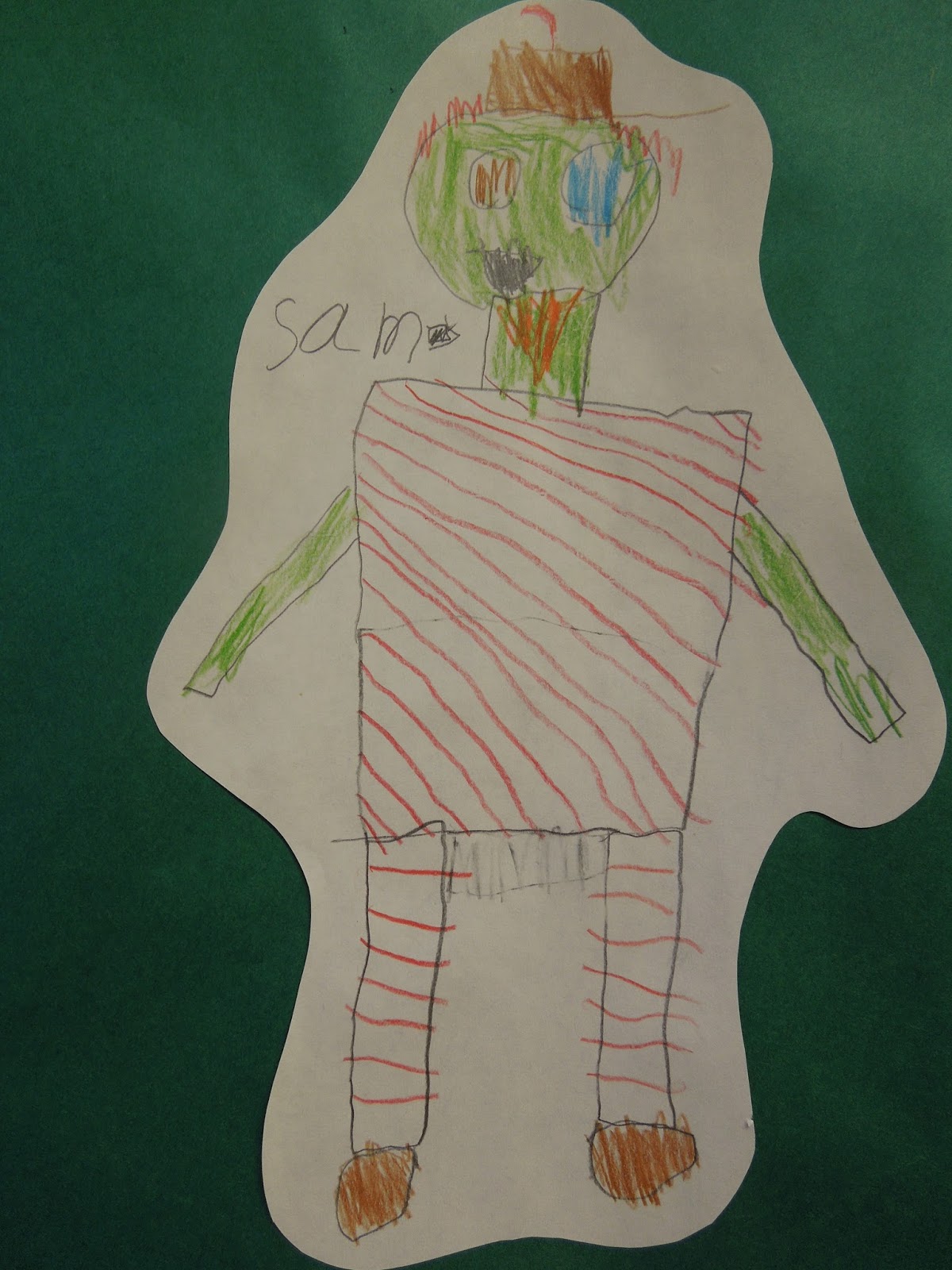
The second visualization activity was to use the imagery from a Jack Prelutsky poem about a giant.  The poem had great descriptive language to describe the giant.  Mr. Palmer read the poem and the students drew the giant descriptor by descriptor.  Then, Mr. Palmer reread the whole poem and the second graders drew their mental image of the giant.  It was fun to look at all the different visualizations.


Saturday, September 3, 2016

Learning Letter Sounds


In first grade phonics and spelling, we are starting the year by reviewing letters. We are working on handwriting, knowing the letter sounds, matching capital and lower case, distinguishing beginning and ending sounds, and reading and writing words beginning with the focus letter. To practice these important foundational reading skills, one tool we are using is the iPads and a series of phonics apps.


We have developed a phonics routine to review and develop these skills. First, we watch and sing Jack Hartman's Letter Sound Song. Then, we introduce the focus letter. The children are really enjoying watching the StoryBots video clips for each focus letter. You will notice I have linked all the StoryBots videos to the button bar at the top of the blog.


After doing the introduction of the focus letter as a whole group, the children set to work on a series of apps.  The students work through Letter School, Starfall, Letter of the Day, and Sound Sort.  In each app, the students get specific and guided practice at writing the letter, identifying and discriminating the sound, and reading words beginning with the focus letter.  The students get to work at their own pace and receive specific and immediate feedback on how they are doing on the skills.  The apps are designed to help students on areas of struggle and challenge and advance students when they are ready.


While the iPads are an important and powerful tool for our learning, it is not the only way we are learning.  Having balance in everything is extremely important.  When reviewing letters and sounds, our activities have ranged from traditional paper/pencil work, wonderful read alouds, art oriented review, singing and dancing, cooperative activities, whiteboard practice and independent skill work.  For instance, after we read Chicka Chicka Boom Boom, we made our own classroom tree.  Students use the tree they made as reference to sort capital and lowercase magnetic letters.


We Are Special


In social studies and in reading, we are starting a unit on making friends.  This week we discussed how being a good friend starts with being kind to ourselves.  In addition to learning the song above, we read the wonderful book Rainbow Fish (click on the title to see a video of the book read aloud).  In Rainbow Fish, the fish has all these sparkly scales, but he is not truly happy until he shares that special part of himself with others.  We talked about the things that makes each of us special, our likes and dislikes, and our similarities and differences.  We even made a glyph to represent some of these things.


Our fish glyphs followed these directions.  The students had to color the fish to represent his/her different characteristics.
The Rainbow Fish activity allowed us to learn lots about each other.  The students enjoyed sharing their glyphs with each other and finding the similarities and differences.  Besides allowing the students an opportunity to get to know each other better the glyphs also gave me insight into the students' preferred learning styles.  It looks like I will be incorporating a lot of art, music, and movement into lessons this year!